Inspecting the Foundation of a Used Home Before the Sale

foundation repair dallas, foundation repair houston, foundation repair austinInspecting the Foundation of a Used Home Before the Sale

Do you know what foundation things to look for when buying a used home? There are several things that can inform you about the condition of the foundation that is supporting the house. And they are well worth the investment of time and money.

How do you know that a home you are considering buying has had any structural problems, including any foundation repair? First, you need to ask the seller. The seller is supposed to inform you without having to ask, but make sure to ask. Texas law requires the owner of the home to provide a potential buyer with “full and accurate disclosure of any foundation issues and repairs.” The information you will need to get includes the reason for the repair, the date of the repair, which method was used, the extent of the repair work, and documentation of repair.

Additionally, the following questions are very important for you, the potential buyer:

  1. What kind of warranty is in place with the repairs? Is that warranty transferable to a new owner? How long is the warranty period?
  2. What is the name of the company that provided your foundation repair work? Is it still in business?
  3. Did the owner obtain a building permit? If yes, make sure to get a copy of it. Building permits are issued by local government agencies. It could be a permits office, planning department or clerk office for the county or city.

There are some things to look for in the warranty. A lifetime transferable warranty does not mean that the entire foundation is covered. Likely, only the work the company did and the components they used fall within the warranty. Read the service agreement or warranty because some foundation repair companies include other exclusions as well. Most do not include the repair of the distress in the above-foundation structure, like cracks in tiles or drywall. Those repair expenses, sometimes referred to as “adjustments”, usually fall to the homeowner. Finally, determine whether a Professional Engineer (PE) designed the foundation. Obtain the drawings. The PE should have performed a soil test. Get the testing laboratory reports on that soil. The easiest way to get this done is to hire a licensed real estate inspector. They know where to research all the documents. However, there is a fee for their service. Otherwise, the local governing agency that issues residential building permits is the place to start. They will direct you as to how to access the documents.

Make the best buying decision you can make. Get the information you need and be patient while waiting for it. Then, enjoy your home for years to come and always call Dawson Foundation Repair when you encounter foundation issues.

Dawson Foundation Repair installs only Bell Bottom Piers for homeowners and commercial property owners. Bell Bottom Piers have far more advantages over any other method of foundation repair and we feel the homeowner should receive the best option available. Dawson Foundation Repair services homes and commercial businesses all over Texas including Austin, Corpus Christi, Dallas, Houston, San Antonio, and other smaller cities. Call us for a free inspection and assessment of your home’s foundation security.

Posted in Blog, Learn | Tagged , , , , | Leave a comment

Buying a New Home? Check the Foundation!

Foundation RepairBuying a New Home? Check the Foundation!

When buying a new home there are many things you can do to ascertain the quality of the foundation upon which the residence was built. From appearances the foundation and the surrounding landscaping are in almost ideal conditions on new properties. At least they should be! But how can you evaluate the unseen portion of the new home’s foundation—the soil underneath?

There are several documents you can request prior to the purchase of the newly constructed home. If the inspections were done, there are reports. If they don’t have reports you must consider that the inspections were not done. Get answers to these:

  1. Ask for any written inspection reports. These could have been prepared by a professional engineer or a Licensed Real Estate Inspector. The disclosure notice of the transaction should reflect whether there were any such inspections. If there were, get the reports.
  2. Find out what type of foundation the house has. Ask for any Inspection Reports of the foundation installation that might have been performed by a professional engineer.
  3. Ask if there is more than one type of foundation supporting the home you are considering buying. Some builders will build the interior foundation with piers. But, to cut costs they might support exterior portions of the foundation with shallow beams on soil. Ideally, the home has one solid support system for the foundation.
  4. Ask this specific question, “Was the foundation designed by a Professional Engineer based on a site-specific soil report?” This lets you know whether they did a soil test to determine the type of soil underneath the home.
  5. Ask for those copies of the construction drawings and soil reports. It is highly recommended that you engage your own Professional Engineer to read those reports and conduct her/his own inspection for you.

Some other things to note:

  1. Are the slopes of the ground away from the foundation on all sides?
  2. Are there any drains or spouts that will puddle water within 3 feet of the foundation?
  3. Find out if the house was built over any landfill of a swampy area or ditch.
  4. Did the homebuilder remove large trees around or in the footprint of the foundation? The root balls probably left large holes that required fill dirt.
  5. Any barren soil around a new home is a sign that something is going on underneath and may be a problem in the future.
  6. Request copies of the construction schedule or letter detailing when the foundation was cast, drywall floated, floor tile installed and home completed. Get copies of certificates of completion and inspection also.
  7. Realizing that a home is usually the largest single purchase a person makes, go ahead and asked for aerial photos of the site prior to development. This will help you understand any changes made to the ground upon which the house was built.
  8. While you’re at it (this was mentioned in #5 previously), it might be worth your investment to hire your own professional engineer for an independent design and construction review.

Dawson Foundation Repair wants you to buy your new home with full knowledge of the quality of foundation of the home. Our experience of foundation repair in Texas since 1984 indicates that homeowners are usually surprised by what actually exists under the foundation. Exercise your consumer rights. And when you need foundation professionals for you home, Dawson Foundation Repair is ready to assist. Our bell bottom pier method of foundation repair is the gold standard. Your home is worth it.

Dawson Foundation Repair installs only Bell Bottom Piers for homeowners and commercial property owners. Bell Bottom Piers have far more advantages over any other method of foundation repair and we feel the homeowner should receive the best option available. Dawson Foundation Repair services homes and commercial businesses all over Texas including Austin, Corpus Christi, Dallas, Houston, San Antonio, and other smaller cities. Call us for a free inspection and assessment of your home’s foundation security.

Posted in Blog, Learn | Tagged , , , , , | Leave a comment

Floods and Structural Damage

Heavy spring rains have drenched parts of Texas, even to the point of causing deadly flooding. The damaged caused by these floods is always astronomical. In fact, according to FEMA, 90% of disaster related property damage is caused by flooding.

Along with the obvious damage to personal belongings, mementos, heirlooms, etc., the floodwaters are also capable of damaging your home’s foundation. One common problem is the buoyancy of the foundation. When saturated soils due to rain become supersaturated with flooding waters, the foundation acts the same as a boat would in a heaving body of water. The foundation, like a boat, displaces water. The upheaval from the water underneath could damage the integrity of your slab. Portions of the slab could crack because other parts of the slab do not have the same pressure from floodwaters.

A second threat by floods on your foundation is the erosion of soil that supports your slab. When floodwaters withdraw rapidly, the tension and pull of water moving away from your foundation could also pull the soil with it. The withdrawing water could erode the soil supporting either the side of your home’s foundation or soil that has been the base underneath your slab. Without this support, your foundation could be damaged because there is nothing but air between the foundation and the soil underneath. When the area of erosion becomes large enough, the weight of the home and foundation will literally crack the foundation and it will collapse until it reaches support (soil). If the depth of erosion is large enough and broad enough it could literally crack the home in half.

foundation repair; foundation repair houston; foundation repair dallas; foundation repair austin;

This is an extreme example of how floodwaters erode the soil supporting a foundation. This apartment complex on the banks of a small creek had to be demolished.

Dawson Foundation Repair has served the residents in the state of Texas since 1984. Our experience is that pressed pilings, cable pilings and steel pilings are not the best method for withstanding the strong lateral forces of floodwaters. That’s why Dawson has used the bell bottom pier method of foundation repair. Each pier acts as a solid unit and is better suited to resist the lateral forces of fast-moving soil and water.

Dawson Foundation Repair understands the problems your home’s foundation faces in the San Antonio area. We hope your home is safe from flooding. But if you are unsure about the condition of your foundation, call us for a free inspection.

Posted in Blog, Learn | Tagged , , , , | Leave a comment

Sinkholes in Texas

Sink Holes in Texas

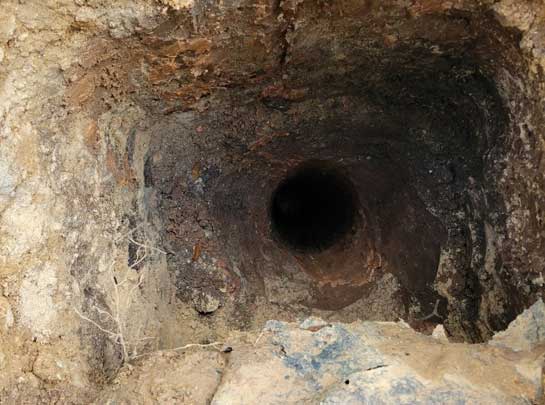
Texas is one of the top two states where sinkholes occur. After Florida, the Lone Star State leads Alabama, Kentucky, Missouri, Pennsylvania and Tennessee in the number of sinkholes. About 35 percent of the United States has underground rock types that can be dissolved by groundwater circulating through them (salt rock, gypsum, limestone and others). When the underground rock dissolves, the soil over it collapses and becomes visible on the surface as a sinkhole. Texas is in that 35 percent. Here’s a photo of the most recent sinkhole in Texas. It occurred in May 2008 in Daisetta, Texas, northeast of Houston.

Foundation Repair in Houston Texas (713) 688-2110

Sinkholes do not have to be large enough that they make the six o’clock news. Some sinkholes have only been wide enough for an adult to fit in. There is a sinkhole on the 14th hole of a golf course in Illinois that was just wide enough to swallow a golfer. The golfer died because the sinkhole was about 20 feet deep. Sinkholes can look like craters or bowls or small shafts. Regardless of the shape and type of sinkhole, if they are near your home they are a threat to your home’s foundation.

Dawson Foundation Repair has these tips for you:

  • Know your property! Check regularly to see if there are any areas that appear to be shrinking, especially along your foundation. Are you seeing parts of your foundation that were not exposed before?
  • Is your vegetation wilting, but not drying out? This suggests poor drainage and can be a problem.
  • It’s also good to check vertical structures such as your fencing and trees. If there is sagging or severe leaning developing, watch the area.
  • Watch for ponds or little collections of water forming in places that were previously dry.
  • If you notice any sediment or dirt in your water, this can also be a sign that water pipes are leaking, cracked or starting to give way to soil.

Not all depressions in the ground, or water collections in low places or leaning fence posts mean you have a sinkhole on your property. But if you are concerned you need to have it checked by either your insurance adjuster or by a paid engineering firm to check your property. Dawson Foundation Repair can come out and conduct a free inspection of your home to see if your slab still has its integrity. Not all foundation companies are the same. Not all use the same quality materials or methods. But since 1984 Dawson’s reputation is highly regarded because of the bell bottom pier method of foundation repair. It is reliable and tested over time.

Dawson Foundation Repair installs only Bell Bottom Piers for homeowners and commercial property owners. Bell Bottom Piers have far more advantages over any other method of foundation repair and we feel the homeowner should receive the best option available. Dawson Foundation Repair services homes and commercial businesses all over Texas including AustinCorpus ChristiDallasHoustonSan Antonio, and other smaller cities. Call us for a free inspection and assessment of your home’s foundation security.

Posted in Blog, Learn | Tagged , , , , , | Leave a comment

“Kinda / Sorta” Structural Engineers

“Kinda / Sorta” Structural Engineers

Do you prefer a “kinda/sorta” or a “real” Structural Engineer to approve your Foundation Repairs?

You wouldn’t allow a dentist to operate on your eyes, would you? Structural Engineering is one of the many branches of Engineering, some of which include Industrial Engineering, Electrical Engineering, Civil Engineering, etc. Letting an Engineer other than a Structural Engineer check your house foundation structural integrity or sign off on foundation repairs is similar to having a dentist work on your eyes – or a foot doctor performing your heart surgery.

Foundation Repair in Dallas Texas

Is he a “kinda/sorta” or a “real” Structural Engineer?

The wrong kind of engineer looking at your house foundation and giving recommendations is a more common problem than you think. Perhaps this is why many foundation repairs don’t work, because some of these engineers approve things that don’t meet the building code. The difference between the types of engineers is in their formal education, training or experience, and examinations.

Education wise, students decide what kind of engineers to become early on because after graduation it is usually too late. Structural Engineers learn about concrete, rebar, foundation design, steel design, walls, floor, roof design, retaining wall design, etc. Civil Engineers learn about topography, surveying, water drainage, roadway/highway design, etc. Mechanical Engineers learn about engines, air conditioners, pumps, etc.

After or just before graduation, the State of Texas requires each soon-to-be engineer to pass the Fundamental of Engineering (FE) Exam. While some of the basics of general engineering are tested, each major field of engineering has a specific exam.

After passing the FE exam, candidates gain experience for at least 4 yrs before they take the Professional Engineering (PE) Exam. The PE exam is highly specialized, with the Structural Engineering Exam asking nothing but structural engineering questions. The mechanical engineering exam asks nothing but mechanical engineering questions, etc.

Loophole #1

A well known loophole in the Texas law allows engineers to take some exams that don’t match the experience they claim to have. For example, historically, the pass rate for the Structural Engineering PE exam has been about 20%. However, the pass rate for the Civil Engineering Exam has been about 65%.

This means that passing the Civil PE Exam is easier than passing the Structural PE exam. That is why many engineers who can’t pass the Structural PE exam end up taking the Civil PE Exam and then practice Structural Engineering. The same is true for other branches. Some Engineers end up taking the Mechanical Engineering exam, and when they pass, they also start doing civil engineering.

You will be surprised to know that many of the Engineering Companies providing foundation repair services are either civil, mechanical, or electrical engineers. A full roster is available at the TBPE website.

Shouldn’t there be a law against this? There is. The Board of Professional Engineers (TBPE) investigates any engineer who is practicing outside his area of expertise. When you pass the PE exam, TBPE gives you a designator, such as “STR” for Structural or “CIV” for civil, or “MEC” for mechanical. If TBPE has you listed as a CIV but that engineer does structural work, then that engineer is practicing outside his area of expertise. An engineer practicing outside his area of expertise is like speeding down the highway, if there aren’t any police around, they won’t get caught.

Loophole #2 (this is a Big One)

There’s sadly another loophole. Some Engineers have already been caught by TBPE and slapped on their wrists. TBPE allows Engineers to avoid taking a Second Exam if the Engineer can find another engineer who attests to the first engineer’s experience in a particular field.

For example, if you’re a mechanical engineer the TBPE will give you a MEC designator next to your name. If you want to be added as a Structural Engineer and avoid taking a very difficult exam, then all you have to do is find a friend PE (or hire a PE) that will say that they know you have been doing structural engineering (it doesn’t matter that you’ve been doing it right or wrong) and TPBE will add you as a STR just by taking that other PE’s word for it. We suspect some engineers have done this. In fact, many Foundation Repair Companies in Texas have work approved by such kind of Engineers.

So, do you want a foundation repair company that uses a “kinda/sorta” Structural Engineer or a “real” Structural Engineer to approve the foundation repairs to your home?

We wish to thank A-1 Engineering for assisting us with some of the technical issues involved in this blog article.

Posted in Uncategorized | 1 Comment

Faults in the Metroplex

foundation repair; foundation repair dallas; foundation repair houston; foundation repair austin;The Dallas-Fort Worth Metroplex is facing another long summer of moderate to severe drought conditions. But, there is another environmental issue that is very common in the area and is also possibly threatening your home’s foundation if you live in the area.

There are two fault lines in the region. Between the fault lines is a geological formation called the Balcones Fault Zone. The Balcones Fault Zone runs from northern Mexico northeastward through San Antonio and Austin and up between Dallas and Fort Worth. On the west side of the Balcones Fault Zone is the Ouachita Tectonic Front (a fault line). The eastern edge of the Balcones Fault Zone is the Balcones fault line.

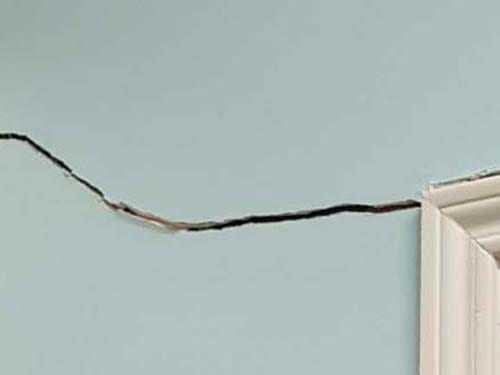
Fault lines are natural locations for earthquakes to occur.  In 2009, there were 17 minor earthquakes (measuring less than 3.0 on the Richter Scale) in the Metroplex region. The frequency seems to be increasing. In June 2012 alone there were six earthquakes! One earthquake caused more than $100,000 damage to the Boy Scout Museum in Irving, Texas.  A minor earthquake is very capable of causing structural damage in your home—broken windows, downed fences, cracks in walls and ceilings.

Then, there’s the Barnett Shale that runs underneath Fort Worth. Underneath the shale is thought to be the largest natural gas reservoir in the country. But to get to the gas there is a lot of drilling and hydraulic fracturing (breaking the rock with high pressure water, sand and chemicals to access the natural gas). This water has to be collected from a large source, usually groundwater or surface water. The water then has to be disposed elsewhere because it’s contaminated by the chemicals. That means that the water used in hydraulic fracturing is being removed from already extremely dry soil throughout the area. Drought and drilling impact the soil’s moisture content.

Droughts. Drilling. Faults. All this shaking and shifting increases the chance that area homes will need foundation repairs. If any of these happen you probably need to have your foundation inspected.

Dawson Foundation Repair is experienced with foundation repairs in the Metroplex caused by shifting soil underground. Dawson uses the best possible method to repair your foundation and it’s a solution that can resist further damage by these prolonged environmental stresses. The bell bottom piers foundation repair method is the most trusted and permanent house leveling solution for the Metroplex area.

Pressed pilings, steel pilings and cable pilings cannot withstand lateral soil shifting as well as bell bottom piers can in soils like the clay underneath your home. Pushed pilings are stacked, one upon another, and do not act as a single unit. Therefore, if heaving and shifting soil misaligns one or two of the concrete pilings that are stacked one upon another, the entire integrity of the column could be compromised. But the bell bottom piers are single pieces of solid concrete that are reinforced with steel rebar that not only support your foundation but firmly resist the shifting soil conditions.

Dawson Foundation Repair installs only Bell Bottom Piers for homeowners and commercial property owners. Bell Bottom Piers have far more advantages over any other method of foundation repair and we feel the homeowner should receive the best option available. Dawson Foundation Repair services homes and commercial businesses all over Texas including AustinCorpus ChristiDallasHoustonSan Antonio, and other smaller cities. Call us for a free inspection and assessment of your home’s foundation security.

Posted in Blog, Learn | Tagged , , , , , , | Leave a comment

“Point of Refusal” and Foundation Repair

Until you’ve seen a professional team of foundation repair specialists working on the job, it’s easy to think that repairing a slab is just a matter of digging a hole and jacking up the concrete foundation back in place. But there is so much more, and each additional thing is significant toward a long-lasting resolution of your foundation problem.

Protect Your HomeOne of those important steps is how deep the supporting pier or pilings must go to do the job. In the pressed piling method, the pilings are impacted by the “point of refusal.” “Point of refusal” does not refer to the repair company’s reply of “No, we don’t do that” to your questions like, “Do you test the soil before you decide how far to go down? How do you guarantee the pilings are deep enough? Or, can you forego the Mandatory Arbitration document?”

The “point of refusal” is the moment when the weight of your home cannot push the concrete pilings any deeper into the ground. The “point of refusal” may or may not be deep enough to reach stable soil. If the concrete pilings, which are stacked one upon another, are not deep enough to reach stable soil then they have little to no chance of providing permanent support for the foundation.  What is even worse, if the contractor’s workers do not stop the hydraulic jacking process immediately after reaching the “point of refusal” they will literally lift a portion of your foundation and home into the air. However, they won’t lift it very far into the air because it will break with a thunderous crack. If this happens, then you have far more damage to your home than when you started, and unless you are taking a video at the moment of damage, you will have a hard time proving that the repair contractor is liable.  You can’t sue the contractor either, because you have signed away your right to sue with a Mandatory Arbitration clause in the contractor’s contract. (“Good Luck” with Mandatory Arbitration because the contractor selects the for-profit arbitration company that rules against consumers 90% to 97% of the time.)

This is another reason that the bell bottom pier system is much better for your home than any pressed piling or cable lock system. Contractors that utilize the pressed piling method rarely perform a soil test so they don’t know how far below ground level is stable soil.  Therefore, they are guessing and hoping that they can drive their stacked concrete pilings deep enough to reach the stable soil or bedrock.

In the pressed pilings method, often the “point of refusal” is more shallow than stable soil! When that happens, the method is doomed to fail because the soil underneath is unstable. Unstable soil shifts from side to side because of moisture changes. It shrinks when dry. It swells when wet. This unstable soil, even though it was the “point of refusal” for the pressed piling, is unable to hold the pressed pilings in place.

Bell bottom piers are not dependent on the point of refusal in order to do the job you want them to do for the rest of the life of your house. It is a simple fact—Dawson Foundation’s bell bottom piers are constructed to be permanent and they reach well into stable soil. Dawson does a soil test on every installation site to confirm that they know the depth of stable soil.  When the concrete is poured into the bell bottom pier, the bell bottom acts as an anchor and is solidly positioned within stable soil.

Your home is too valuable not to be certain about the quality of the repair work done to it. Since 1984 Dawson Foundation Repair has used the bell bottom repair in North Central Texas, Central Texas, South Texas, and Southeast Texas to provide trusted foundation repair to homeowners. This time-tested, proven, permanent foundation repair method is superior to steel pilings or pressed concrete pilings.

Dawson Foundation Repair installs only Bell Bottom Piers for homeowners and commercial property owners. Bell Bottom Piers have far more advantages over any other method of foundation repair and we feel the homeowner should receive the best option available. Dawson Foundation Repair services homes and commercial businesses all over Texas including AustinCorpus ChristiDallasHoustonSan Antonio, and other smaller cities. Call us for a free inspection and assessment of your home’s foundation security.


Posted in Blog, Learn | Tagged , , , , | Leave a comment

Concrete Hydration

Concrete HydrationOne of the most common errors in understanding foundation repairs is how concrete works. It becomes a problem when the foundation repair company you use hires laborers who do not understand this primary material.

How often have you heard this comment—“We’re just waiting for the concrete to dry.”? If you hear that statement from the company you are entrusting with your valuable home, you should be suspicious. Concrete does not dry! The way that concrete firms up, hardens and keeps its strength is by means of a chemical process, not a drying process.

Concrete, the most important component of a home’s foundation, requires four ingredients—sand, gravel, concrete mix and water. Mix sand, gravel and concrete together and nothing happens. But when you add water to those three materials a chemical process known as hydration begins. Hydration is not merely getting the ingredients wet. When water and concrete are mixed together the chemical reaction causes a hardening of the material. The sand and gravel provide strength to the concrete/water mix. Without them, the concrete and water would harden but would be more brittle. This chemical process results in hardening of all the materials. Concrete even “dries” (actually “cures”) under water! For that reason, concrete is useful in marine construction.

So, if a business is working with concrete every day, shouldn’t the staff be knowledgeable about it? Dawson Foundation Repair staff is trained to know how to handle the equipment and materials and also to understand how the process works.

Dawson Foundation Repair uses the most reliable and proven repair method—the bell bottom pier method. When the repair requires drilling through your home’s concrete slab or near the very foundation of your prized possession, don’t you want the work done by the best? The concrete slab under your home, especially in north and central Texas, is undergoing a third year of drought conditions making foundation damage even more likely for the homeowner who doesn’t trust their home to the best. Dawson Foundation Repair is the premier foundation repair company that can restore the strength and integrity of your home’s foundation.

Dawson Foundation Repair installs only Bell Bottom Piers for homeowners and commercial property owners. Bell Bottom Piers have far more advantages over any other method of foundation repair and we feel the homeowner should receive the best option available. Dawson Foundation Repair services homes and commercial businesses all over Texas including Austin, Corpus Christi, Dallas, Houston, San Antonio, and other smaller cities. Call us for a free inspection and assessment of your home’s foundation security.

Posted in Blog, Learn | Tagged , , , , | Leave a comment

Pressed Pilings – Issues You Should Be Aware Of

Pressed Pilings IssuesOne of the shocking truths about foundation repair in Texas is that the most commonly purchased repair method is also the least reliable repair method. Companies that use these methods often pay big bucks to celebrities for endorsements. But this does not mean that the methods they endorse are the solution you need for long lasting security. The pressed piles method of foundation repair does not give you that protection.

The reasons are numerous. First, laborers at pressed pile companies cannot visually confirm whether the piles have been inserted vertically according to specifications. A pressed pile is pushed into the ground and then another pile is placed on top of it, and both are pushed further into the ground. The laborer has no idea if the pushed piles have drifted off in an angle due to hitting a rock or tree root. (If the piles do get driven at an angle then they offer very little to no support for the foundation in the future.) This continues until the piles have reached enough resistance that they will not go any deeper. If the laborer does not stop at this point then the hydraulic jack will lift the foundation and house into the air, possibly breaking the slab foundation in another place.

Second, the soil under the foundation that shifted, causing your foundation to break, is likely to shift again. The support pier needs to act like one piece, not like multiple pieces that can be shifted individually. The soil moves up and down and sideways. If one or more of the stacked piles begin to shift, then the integrity of the stacked column of piles is at serious risk.

Third, the laborers cannot tell when they have reached a sufficient depth for the pressed piles because they have not done a soil analysis. It is entirely possible the depth of these pressed piles is significantly less than your foundation needs. Your foundation needs support in stable soil to resist future soil movement. And because of the lack of depth, the soil movement can easily push these pilings up and down and your foundation will not have the permanent support it needs.

Last, the pressed pile method of foundation repair does not meet the Houston building codes.  As a matter of fact, the only method of foundation repair that is discussed in the Houston Building Codes is the drilled pier or bell bottom pier method. It is only logical to conclude that the best method of foundation repair is presented in the Houston Building Codes.

Since 1984 Dawson Foundation Repair has rejected unproven and temporary methods of foundation repair. Your home is just too valuable. Dawson Foundation Repair uses the bell bottom pier method. It is proven – it is time tested – it is permanent – and virtually every structural engineer in Texas prefers this method.  Your soil is tested all the way down to stable soil. High strength concrete is poured as a single unit to maintain strength. Steel rebar is inserted to make the pier even stronger. And the bell bottom shape gives the foundation greater support.

Your home is worth the best repair you can give it. Dawson’s expert staff and technicians are ready to assist you when you need to take care of your home.

Dawson Foundation Repair installs only Bell Bottom Piers for homeowners and commercial property owners. Bell Bottom Piers have far more advantages over any other method of foundation repair and we feel the homeowner should receive the best option available. Dawson Foundation Repair services homes and commercial businesses all over Texas including Austin, Corpus Christi, Dallas, Houston, San Antonio, and other smaller cities. Call us for a free inspection and assessment of your home’s foundation security.

Posted in Blog, Compare | Tagged , , , , , | Leave a comment

Is Your Soil Pulling Away?

Is your soil pulling awayIf you have had the opportunity to drive through parts of the state, you probably easily noticed how brown the countryside is looking. There is a stark contrast when you drive by field after field of dull green and yellowing plants and then come upon a patch of land that is watered for the sake of the crop. The drought continues in Texas.

Crops and plants are not the only things suffering from the prolonged drought conditions. Have you noticed problems around your home caused by the moderate to extreme drought of our area? Take a close look at your foundation. Walk around it, peering through shrubs and other plants to see that place where the soil and the side of the house meet. If you notice that the soil is pulling away from the foundation, your slab is at risk of cracking and causing much more damage. If you see any of these conditions, take action.

As soils dry, they shrink. And soil is more likely to stick to soil than it is to concrete so it pulls away from the slab. That leaves the slab exposed and eventually unsupported. Without adequate support the weight of the structure is too much for the foundation. The foundation cracks or even breaks.

You have to be careful on how to deal with this problem. Filling gaps with additional soil or water (or some other material) between the ground that is pulling away and the foundation wall does not help. During this time of moderate to severe drought, even consistent watering with a soaker hose cannot replace the amount of moisture lost. It’s just been too dry for too long.

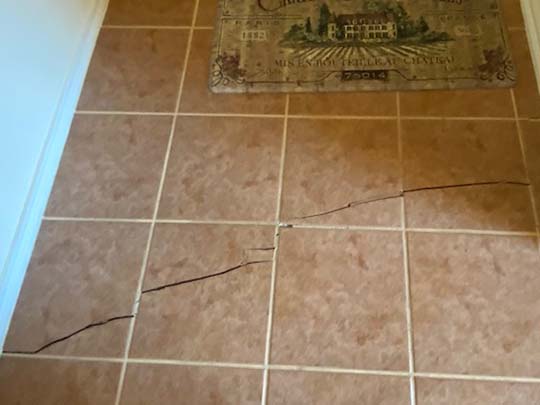
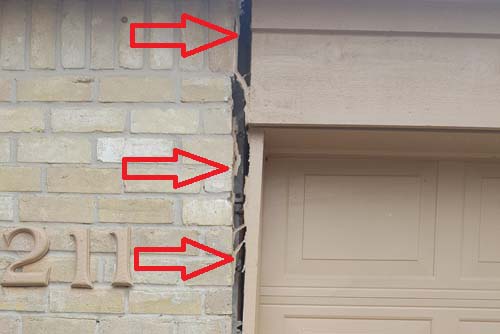
When you check your foundation and there are telling signs of possible problems (cracks in the slab, bricks separating from each other, doors/windows that you are now having trouble opening), you can get a free foundation inspection.

Dawson Foundation Repair offers a five phase inspection that gives you an expert assessment of the condition of your foundation. A trained technician will thoroughly inspect your home’s exterior, measure the interior floor plan and then conduct a detailed inspect of the interior of your home. The foundation expert will sit down with you to discuss options and compare foundation repair methods.

There are less expensive and quick “fixes”. And then there’s the gold standard—the bell bottom pier method of foundation repair. Dawson Foundation Repair has used this proven and superior method since 1984. Whether your home is in North, Central, East or Southeast Texas, this method is noted by structural engineers as the most reliable repair.

Dawson Foundation Repair installs only Bell Bottom Piers for homeowners and commercial property owners. Bell Bottom Piers have far more advantages over any other method of foundation repair and we feel the homeowner should receive the best option available. Dawson Foundation Repair services homes and commercial businesses all over Texas including Austin, Corpus Christi, Dallas, Houston, San Antonio, and other smaller cities. Call us for a free inspection and assessment of your home’s foundation security.

Posted in Blog, Learn | Tagged , , , , , , | Leave a comment